|
In short, lots of things.
When a magnet is magnetised
to saturation, substantially all of the 'magnetic domains' in the magnet
become aligned. If nothing else happens, they'll stay more or less like
that for a very long time. However, anything that disturbs the alignment
of the magnetic domains or releases them from their alignment will reduce
the strength of the magnet. Once the strength has been reduced, it usually
isn't regained unless the magnet is remagnetised. How easily the alignment
is disturbed depends on many things, including the material from which the
magnet is made and its shape.
One thing that permanent magnets like is an easy external path for the
magnetic flux between the two poles of the magnet. Iron and steel provide an
easy path. Air and aluminium make it far more difficult for the magnet. When
the magnet of a magneto is being magnetised in situ, the steel or iron of the
magnetising machine provides an easy route for the magnetic flux. However,
once the magnet is removed from the magnetising machine, the flux path is more
difficult, and the strength of the magnet reduces. How much depends on the
type of magnetising machine used (external or internal), and if an external
machine it can depend on whether the armature is in the magneto body, and if
so it can depend on the rotational position of the armature.
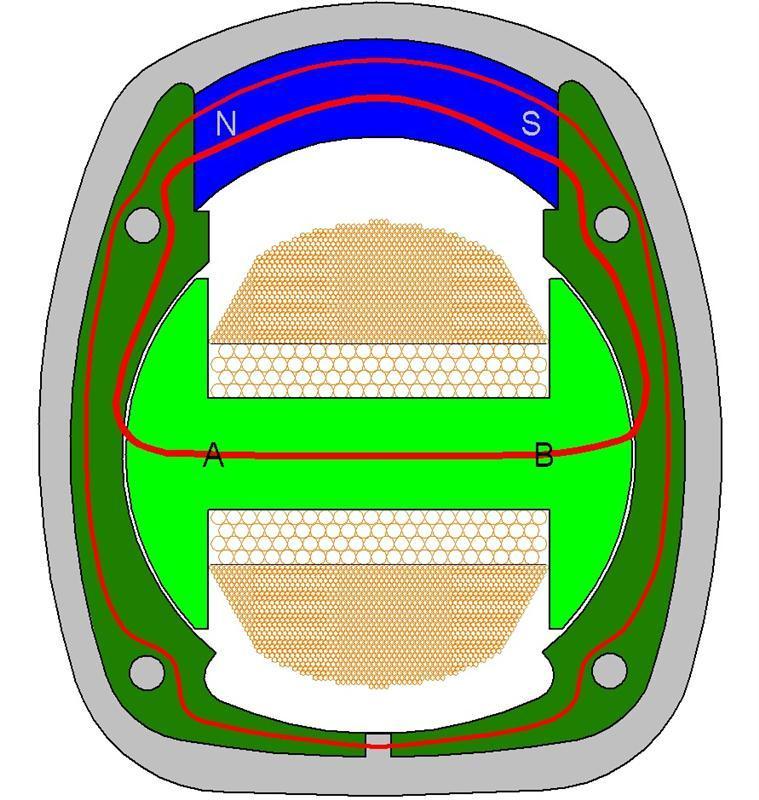
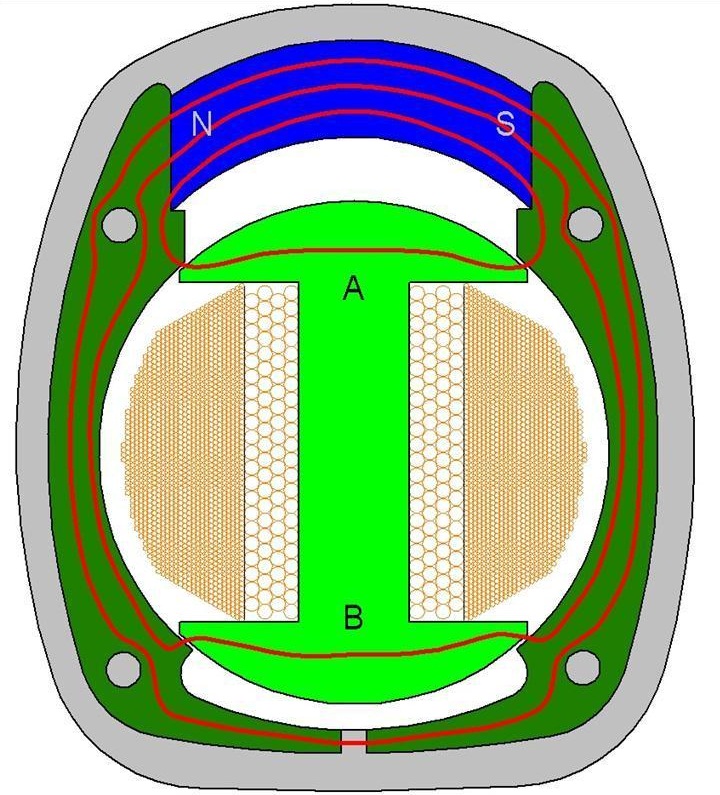
Once the magneto is assembled, and the armature is rotated, the flux path
varies between a relatively easy path as shown in Fig. 1 in which the armature
core is aligned with the poles, and a relatively difficult path in which the
armature is 90 degrees out of alignment (Fig. 2). If the path of Fig. 2 is the most
difficult path the magnet has seen since it was magnetised, then that reduces
the strength of the magnet some more.
Another thing that a permanent magnet dislikes is an opposing external
magnetic field. When the magneto is operating, the electrical currents in the
windings produce a magnetic flux in the armature core opposing the flux caused
by the magnet, and the opposing flux gets passed back to the magnet. Our tests
have shown that with a Lucas K-series magneto, the magnet's strength is
knocked down as a result of this opposing magnetic field to a level less than
when the magneto body is initially removed from an internal remagnetising
machine. The following table contains the results of some tests we carried
out.
|
|
Magnetic flux density (gauss) at centre
of magneto body cavity (in absence of armature) |
|
Immediately after magnetisation |
After 1 minute |
After a further 2 minutes |
After a further 4 minutes |
After a further 8 minutes |
After a further 16 minutes |
|
No armature |
218 |
218 |
217 |
217 |
217 |
217 |
|
Static armature aligned |
218 |
217 |
217 |
217 |
217 |
217 |
|
Static armature 90 degrees out of alignment |
218 |
217 |
217 |
217 |
217 |
217 |
|
3420 armature rpm, with LT open circuit and no capacitor |
218 |
216 |
216 |
216 |
216 |
216 |
|
3420 armature rpm, with LT shorted |
218 |
214 |
213 |
212 |
212 |
211 |
|
1110 armature rpm with 4 mm spark gap in fresh air |
218 |
214 |
213 |
213 |
212 |
212 |
|
1110 armature rpm with 6.5 mm spark gap in fresh air |
218 |
214 |
213 |
213 |
212 |
212 |
|
3420 armature rpm with 6.5 mm spark gap in fresh air |
218 |
212 |
211 |
211 |
210 |
210 |
In each case, the magneto was run (or not run) under the conditions in the
left-hand column for however many minutes. The armature was then temporarily
removed, and the magnetic flux density at the centre of the cavity in the
magneto body was measured with a gaussmeter before replacing the armature and
continuing with the test for however many more minutes.
As can be seen the majority of the observed reduction in magnet strength
happened within the first minute of the cause arising. Subsequent reductions
were small by comparison. We haven't yet conducted any long-term tests under
controlled conditions to see what happens over periods of days or months or
more.
Other things which can cause reduction of magnet strength are temperature
and vibration, and we suspect that when (a) fluctuations in the magnetic flux
path, (b) an adverse external magnetic field, (c) elevated temperature
and (d) vibration are combined, they perhaps have a synergistic effect. If
there is anybody who can educate us on that, we'd be delighted to hear from
you.
Lastly, permanent magnets do lose some strength with time, but we
understand that the effect of time alone is slight.
However, when all of these effects are combined, they cause the
magneto's magnet to lose a significant amount of strength. The Lucas
K-series bodies that come to us for remagnetisation typically produce a
reading of 150 to 180 gauss at the centre of the mag body cavity. After
remagnetisation and removal from the remagnetising machine, the strength
is typically increased to about 200 to 220 gauss, but then drops by
several gauss immediately the magneto is put to hard use.
|
 Brightspark Magnetos