|
In detail, permanent magnets
like to have an easy external path of, for example, steel or iron for the
magnetic flux to flow along between their poles. If the path is made more
difficult and the magnet has to force its flux through a lot of air or
non-ferrous material, it immediately permanently loses some of its
strength. How much depends on the material of the magnet, its shape and
the maximum amount of difficulty it has encountered since it was
magnetised.
A 'keeper' is a piece of iron or steel that is placed between the poles of
a permanent magnet when it is not in use to maintain an easy path for the
magnet's flux.
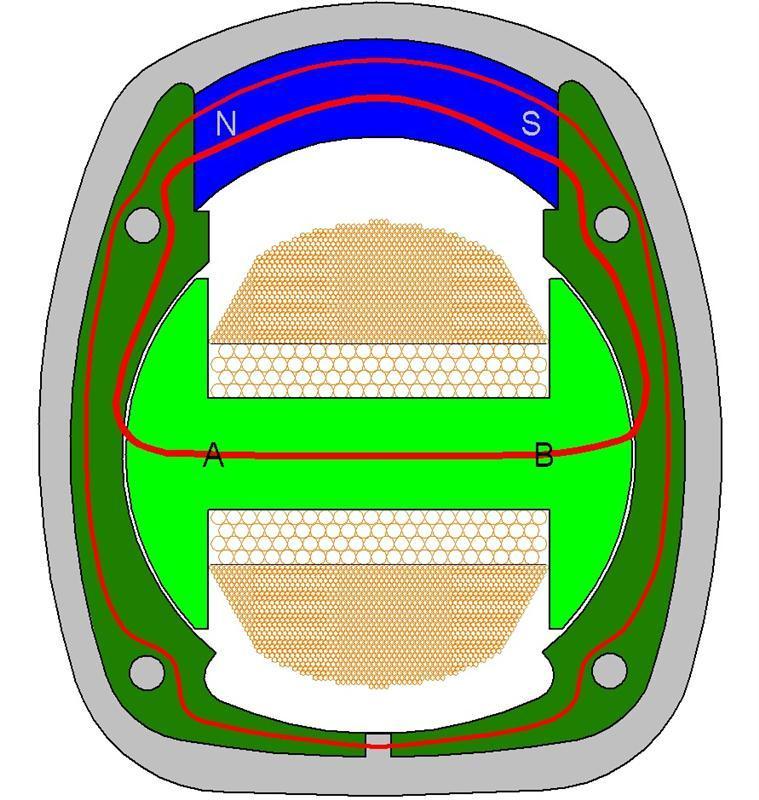
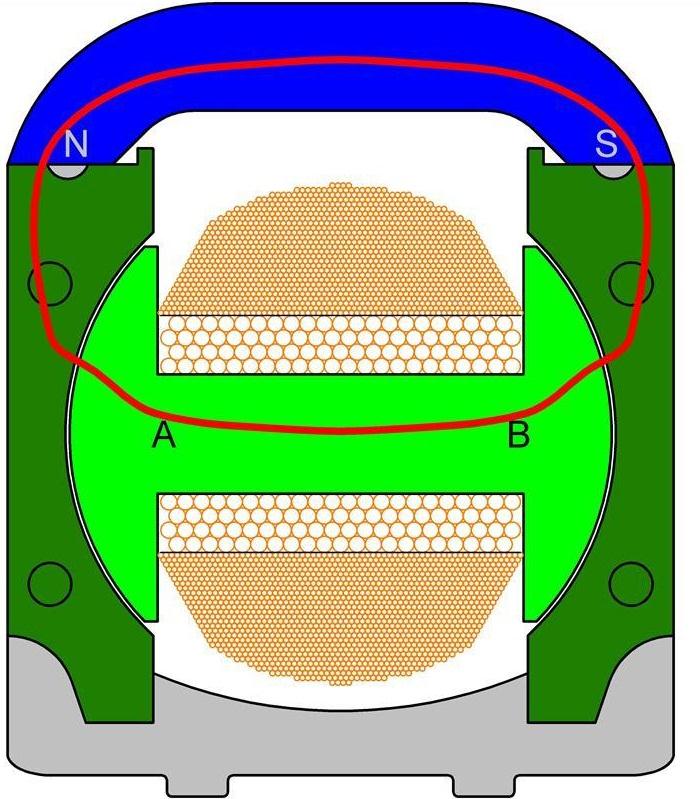
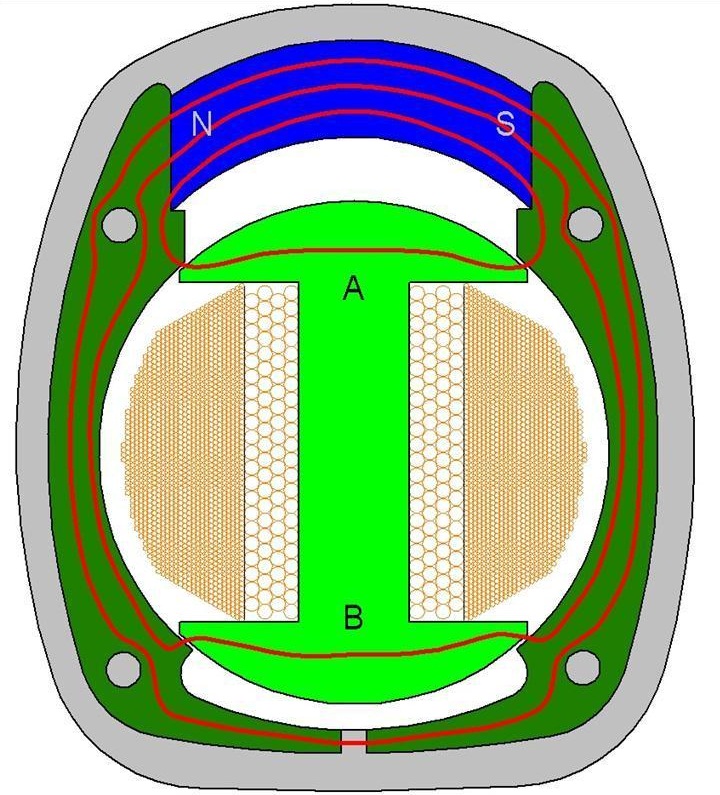
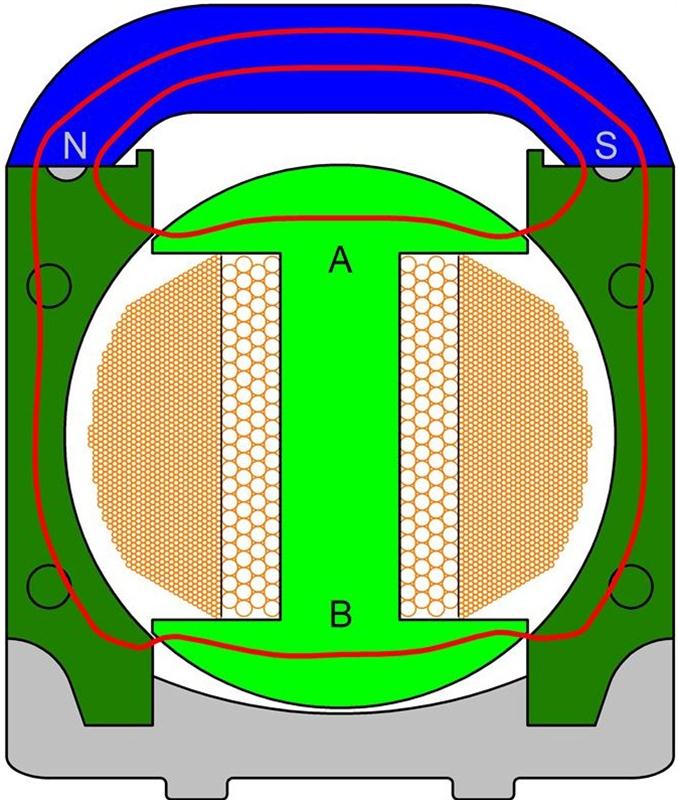
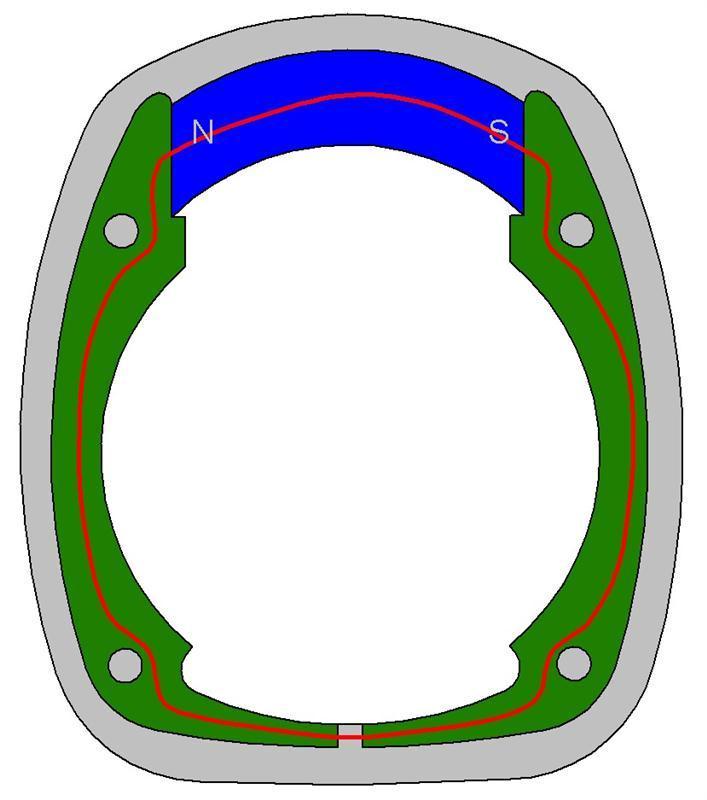
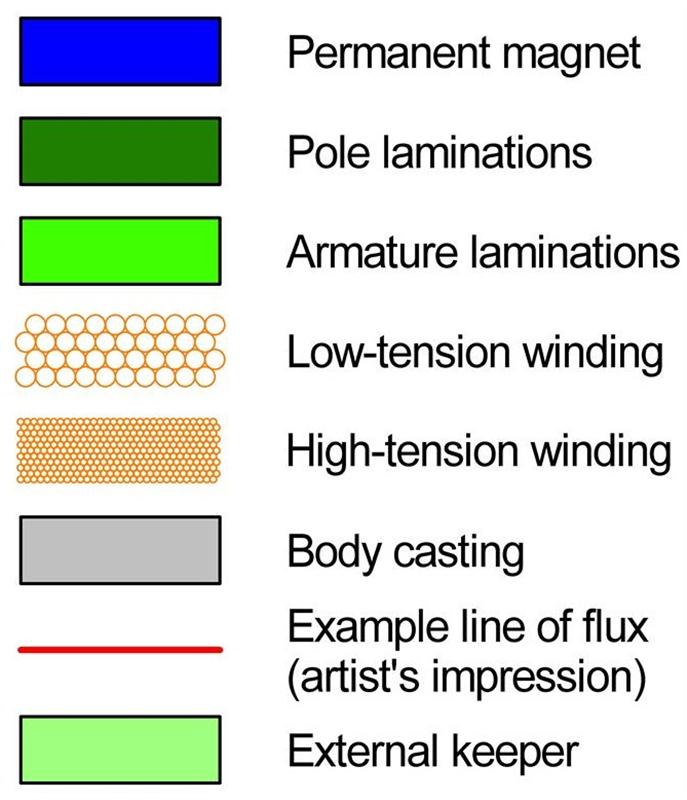
The drawings show the alnico magnet (blue) and its steel
pole laminations (dark green) of a
Lucas K-series magneto and a BT-H KC series magneto. The armature has a laminated steel core (light
green). When the armature core is aligned with the poles (as in Fig. 1) or
rotated through, say, 60 degrees (as in Fig. 2), there is a relatively
easy path for the magnetic flux through the pole laminations and the
armature core and across the narrow but extensive air gaps between the
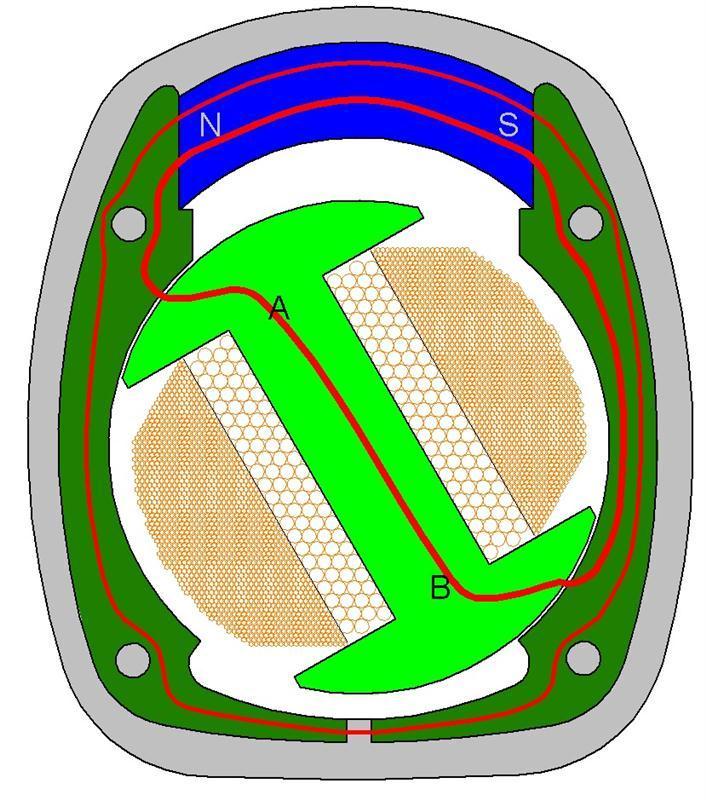
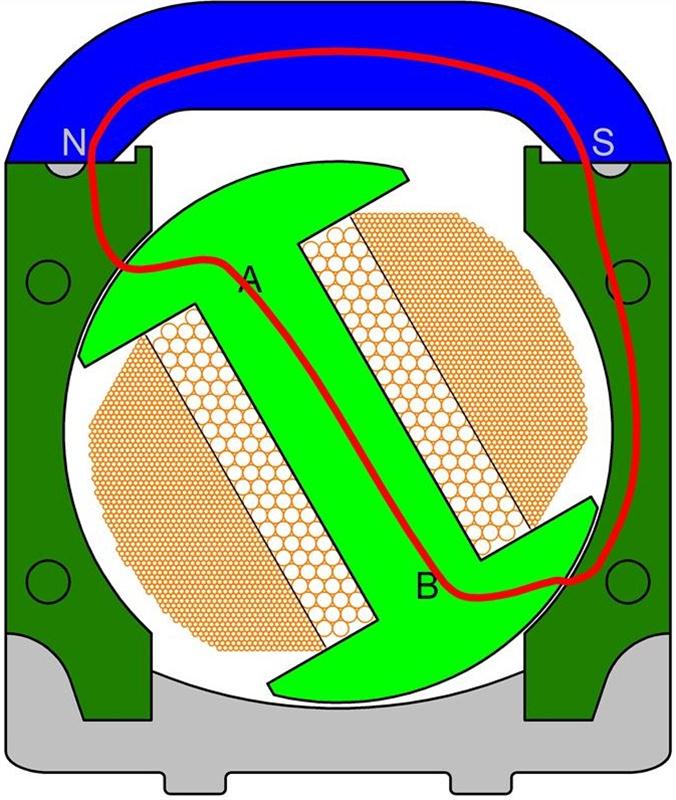
poles and the core. However, when the armature is 90 degrees out of
alignment (as in Fig. 3), it becomes much difficult for the magnet to
force the flux into and out of the armature core. The air gaps at the tips
of the 'H' of the armature core have shrunk in length to almost nothing,
and the small regions of steel adjacent the air gaps can become saturated.
To prevent the magnet having too much difficulty, some magnetos
(including the Lucas K1F, K2F, KVF, N1, KN1, MO1 and MN2) have a 'self-keepering' feature.
The steel laminations in the magneto body extend from the magnet past the
pole faces to two limbs which wrap around underneath the armature and
almost meet, having a small gap of about 1/8 inch between them filled with
the aluminium (grey) of the magneto's cast body. Aluminium behaves magnetically like air. These 'self-keepering'
limbs therefore provide a path for some of the magnet's flux. When the
armature is in the position shown in Fig. 3, they take
some of the flux to reduce the amount of demgnetisation of the magnet, but when in
the Fig. 1 position, there is still enough flux passing through the armature.
Experiments conducted by us on a Lucas K1F and a BT-H KC2 show that if the
magneto is fully magnetised with its armature in the Fig. 1 position, then
the first time it is moved to the Fig. 3 position, the BT-H's magnet
permanently loses about 6% of its strength, whereas the Lucas' magnet
loses only about 3% of its strength.
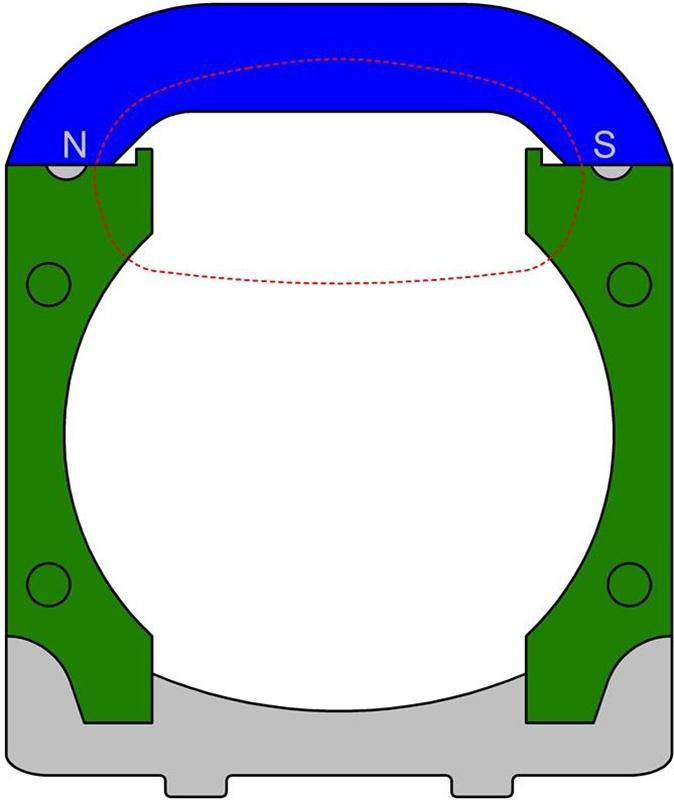
Of course, if the armature is removed (as in Fig. 4), then the path for
the magnetic flux is even more difficult than in Fig. 3. With the BT-H
magneto, the flux is now having to jump a very wide air gap, and our
experiments showed that by simply removing and replacing the armature the
magnet strength permanently dropped another 21% to 73% of its initial
value. By contrast, the 'self-keepering' feature of the Lucas K1F used in
our experiment resulted in its magnet strength permanently dropping merely
by a further 2% to 95% of its initial value upon removal and replacement
of the armature. With this 2% figure, we therefore think that Lucas were
well justified in saying in the Lucas Workshop Instructions for the
N1, KN1, K1F, K2F and KVF magnetos and also for the
MO1L and MN2L magdynos,
The high-energy magnet ... does not need a keeper across it;
although a very small amount of energy is lost at the first removal of
the armature, subsequent removals do not affect it.
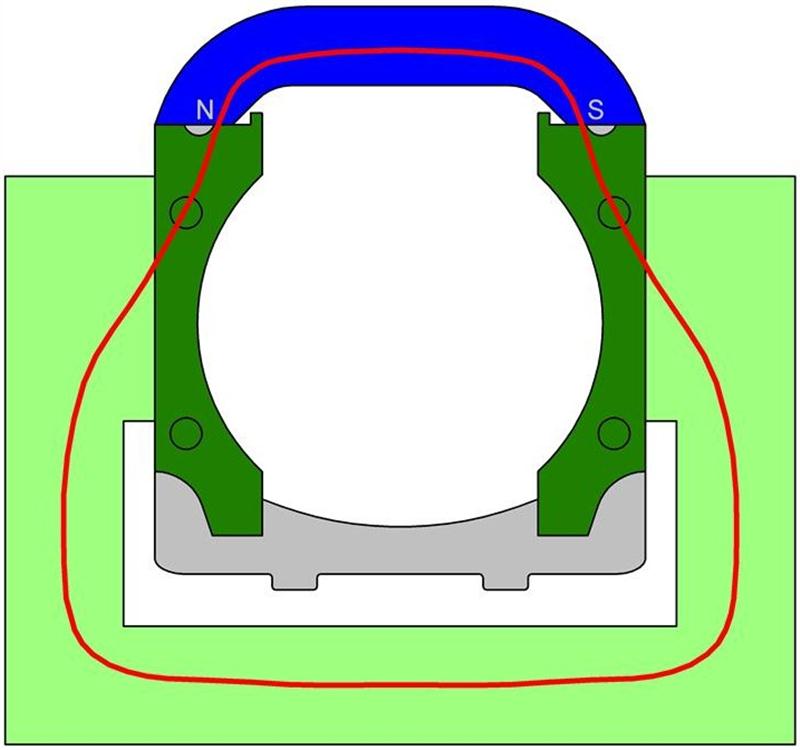
It is of course possible to provide an external keeper for the magnet
of the BT-H magnetos and other magnetos without a self-keepering feature,
as shown schematically in Fig. 5. We find that lightly clamping the
magneto between the jaws of a heavyweight 6-inch cast-iron vice works very
well indeed. With the BT-H magneto used in our experiment, removing and
replacing the armature while the body was clamped in the vice resulted in
no detectable loss in the strength of the magnet below the 6% loss caused
by actually rotating the magneto's armature.
With BT-H magnetos and other magnetos without a self-keepering feature,
it will also be appreciated that, if the magneto's magnet is magnetised
using an internal magnetiser, an external keeper should be used while the
magnetising core is removed from the magneto body and replaced by the
magneto's armature, otherwise the magnet strength will end up being 20% or
more less than it could be.
Another
effect that can partially demagnetise a permanent magnet is exposure to an
opposing magnetic field. The magnet in a magneto is exposed to just that.
When the magneto is operating, the electrical currents in the windings
(orange) produce a magnetic flux in the armature core opposing the flux
caused by the magnet. Our tests have shown that with a Lucas K2F magneto,
the magnet's strength is knocked down as a result of this opposing
magnetic field to a level less than when the armature is removed.
Some further detail of the self-keepering limbs of the pole shoes, to
reduce the demagnetising effect of armature reaction and armature removal,
is contained in
Bosch's British patent No. 171087 (opens in a new window) dating back
to 1920.
|
 Brightspark Magnetos