NEWS FLASH - March 2020 As you will understand, with the Covid-19 pandemic shutting down most normal business, we are not able to despatch orders for the time being. Thank you for your patience. We shall resume operations as soon as we possibly can.
Brightspark Magnetos
NEW ...
Take a look
at some of the equipment we use in our workshop for magneto servicing
and overhauls.
Known as 'Magalysers', our coil testers
are loosely based on traditional
instruments such as the
Eisemann,
but using a modern semiconductor switch, instead of motor-driven
contact-breaker points with arc-suppressing condenser, and using modern
instrumentation.
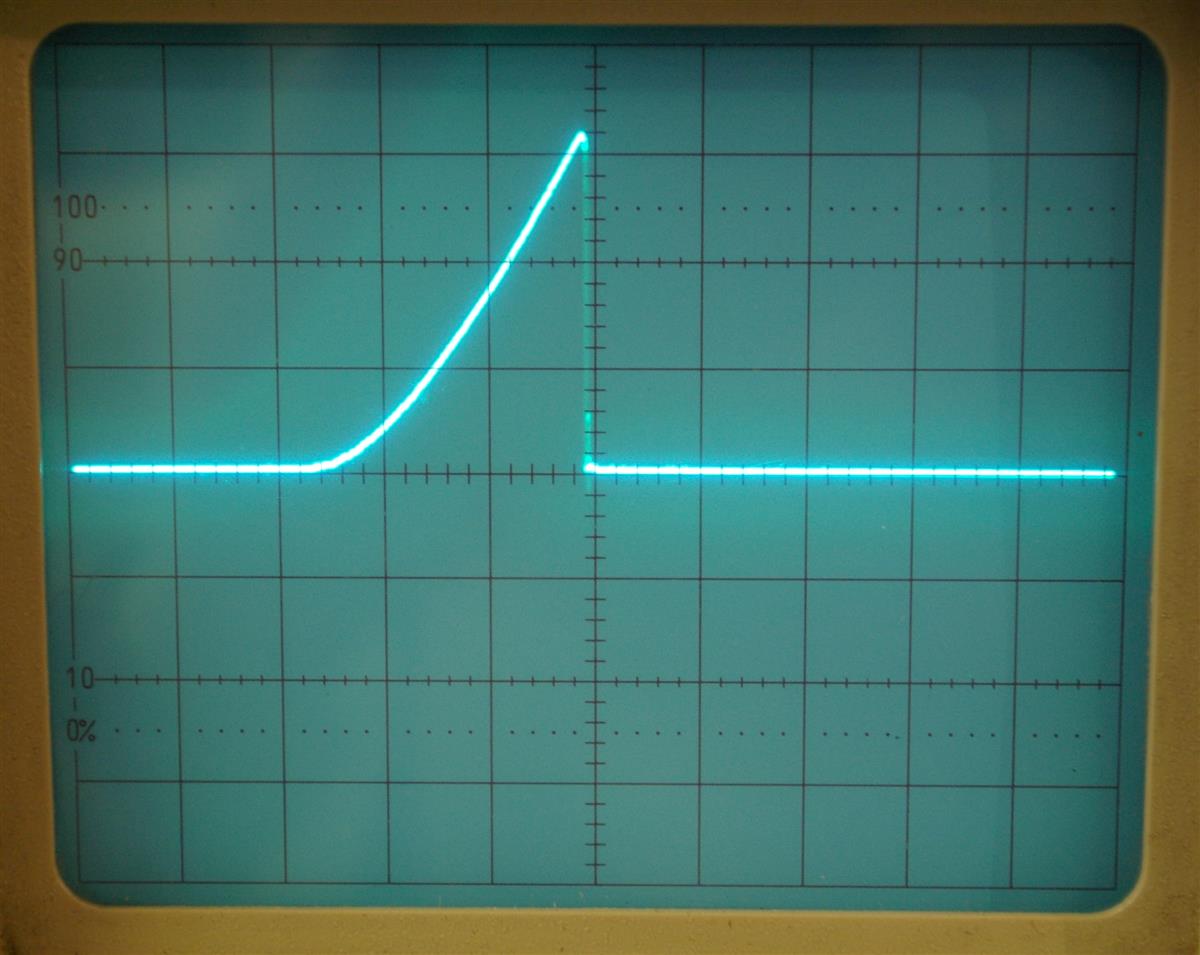
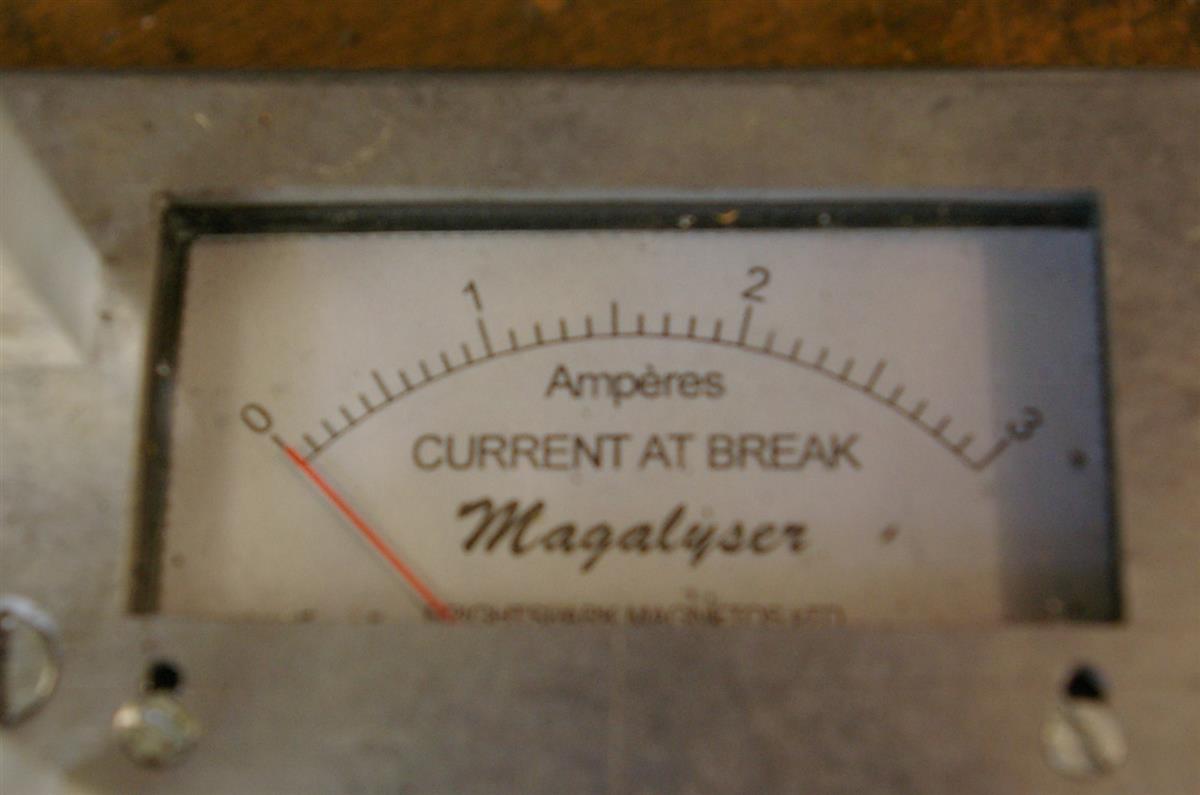
LT current
The Magalyser pumps
suddenly-breaking pulses of current at mains frequency into the low-tension
winding. The current at which the pulses break can be adjusted, and the
break current is displayed on a meter.
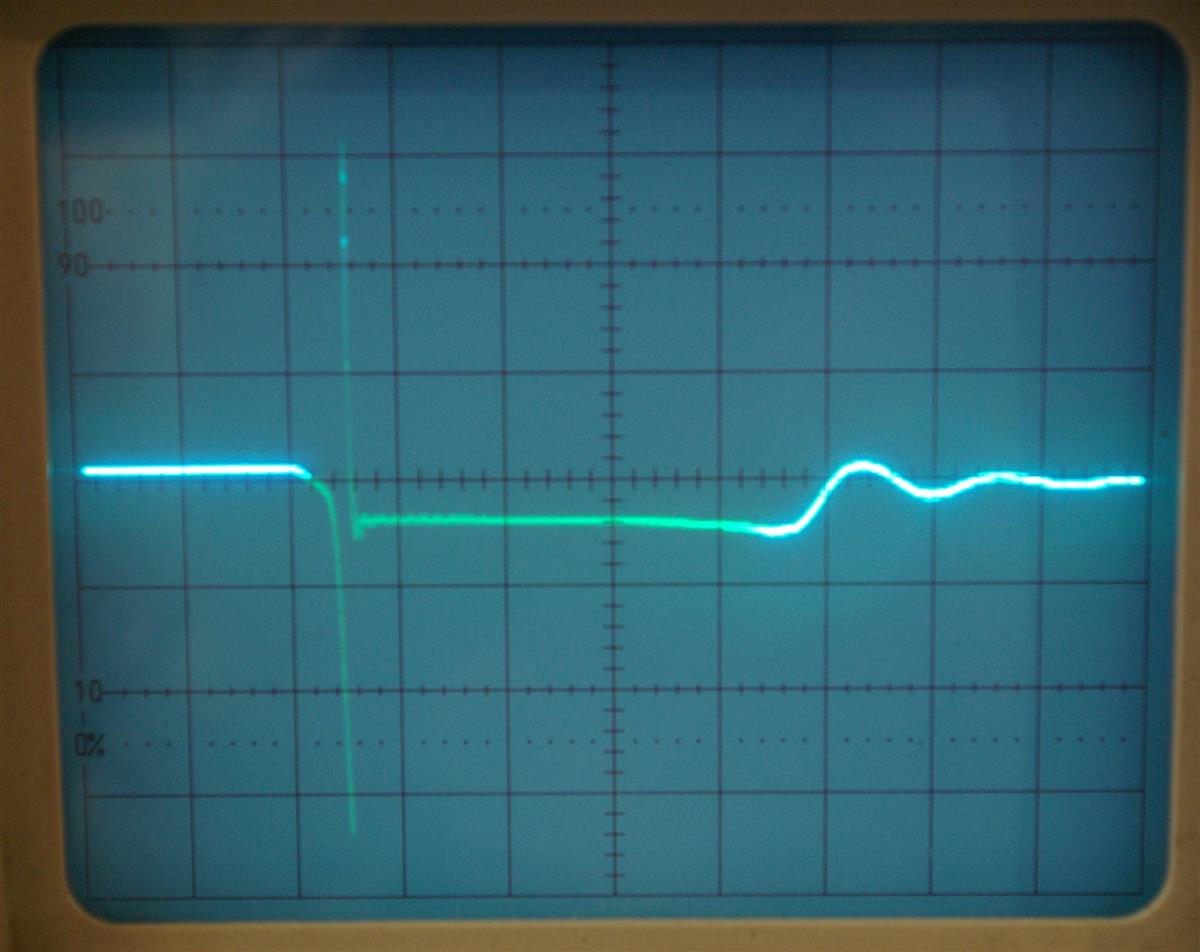
HT voltage
The high-tension output of the
windings is connected to a 3-point test gap, with the gap between the main
electrodes typically set to 5.5 mm.
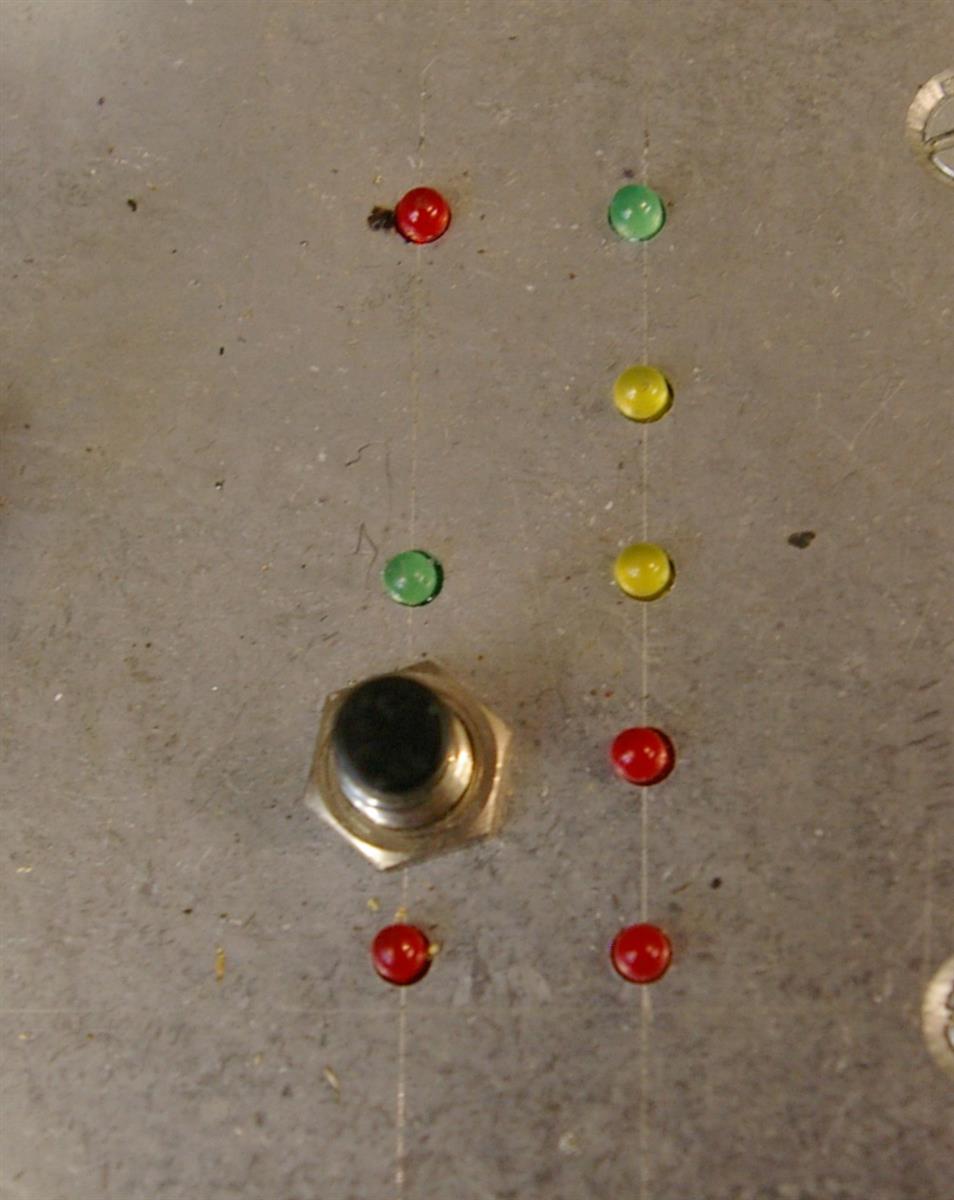
The Magalyser has a detector
circuit which gives an indication of the proportion of sparks that have
recently been missed, and also a tell-tale indicator of whether even a
single spark has been missed since the circuit was last manually reset. So,
if we wanted, we could leave it running unattended for 24 hours, and then
come back and see whether even a single one of the expected 4.32 million
sparks had been missed.
The Magalyser also has an earth
probe, which can be touched on the bobbin body to test for earth leakage (if
the windings are otherwise isolated from the bobbin body). The earth probe
can also be scanned over the outer surface of the windings to check for
flaws in the outer insulation.
(Please click the play button)
We look primarily at the LT
break current at which the windings just start to produce consistent sparks.
That can vary for different makes and models of armature, and even for the
same make and model, particularly if it has been rewound, because different
rewinders use different 'winding recipes.' But from the required current at
room temperature, we can start to get a feel for whether or not the windings
and their insulation are good.
(Please click the play button)
We test windings not only at
room temperature, but also at elevated temperature (usually 50°C). With a
good set of windings, the required break current always increases slightly
with temperature, typically by up to 10% between 20 and 50°C. Good
insulation maintains its dielectric strength over this sort of temperature
range. However, if the insulation is faulty, the fault is usually very
temperature dependent. Therefore, if the break current at 50°C is much more
than 10% higher than the break current at 20°C, it is an indication that the
insulation around the windings is breaking down, and that a rewind is
required. In the example shown in the videos, the windings needed a break
current of 1.7 A when cold, and 2.1 A when hot. That's 22% more when hot. In
this case, we would probably advise the customer that the windings would
probably work OK as is, but we could give no guarantees as to how long they
would last. It would be the customer's choice whether or not to have a
rewind.
These tests on the windings are,
of course, combined with tests for continuity of the HT winding cold and hot
using an ohm-meter. A lack of continuity indicates a break in the HT winding
and the need for a rewind.
Although the majority of "it
won't start hot" magnetos have a fault with the condenser, especially if it
is an original Lucas paper condenser, or a later substitute paper condenser,
a significant proportion of these problems are additionally or alternatively
caused by winding insulation, pick-up(s) or a slip ring that goes leaky when
hot.
Footnote: We do not test for
breakdown between the windings and the bobbin body using an insulation
tester operating
at several kilovolts. That voltage is applied not only between the HT
winding and the body, but also between the LT winding/earth tail and the
body. Although it would be nice for the LT end to be able to withstand such
a high voltage, there is absolutely no need for the dielectric strength of
the insulation between the LT end of the windings and the bobbin body to be
any more than a kilovolt. Applying several kilovolts risks initiating a
breakdown of otherwise perfectly serviceable insulation. Our aim with our
coil testers is to detect bad windings - not to destroy a customer's good
windings.
 Brightspark Magnetos