|
The C01, C02, C03 and C05 EasyCaps have a nominal capacitance
of 150 nF (0.15 µF). For the C04 EasyCap, the figure is 136 nF. The C06 and C07
EasyCaps for Magnéto France magnetos have a capacitance of 220 nF (0.22 µF). The tolerance is ±10%.
The capacitors that we use have an "X7R" dielectric and their capacitance does vary
with temperature, age and voltage.
Over the temperature range 0°C to 60°C, the capacitance can change +1% to -4%
compared to room temperature.
Ageing is caused by realignment of the crystalline structure
of the ceramic and is logarithmic. We do not have a figure from the
capacitor manufacturer, but X7R dielectrics typically have an ageing rate of
-1.5% to -4% per decade and the nominal capacitance is quoted for an age of
1,000 hours after the capacitor was last cooled through its Curie point -
something which happens when the capacitor is soldered to its circuit board.
So, in the worst case, the capacitance will have decreased by 4% after
10,000 hours (about 14 months) and by a total of 8% after 100,000 hours
(about 11 years) total. The capacitor can, however, be rejuvenated if
desired by reheating it above its Curie point, for example by placing it in
the oven at 150°C (300°F, gas mark 2) for half an hour.
When all is said and done, these variations with temperature and age are
insignificant in a magneto application.
The capacitance of X7R ceramic capacitors is also said to change with applied DC
voltage and applied AC voltage. We do not have any detailed data from the
manufacturer for the capacitors we use, and we have not been able to find any
published information about how X7R capacitances change in response to a complex
waveform such as the low-tension voltage in a magneto. Suffice it to say,
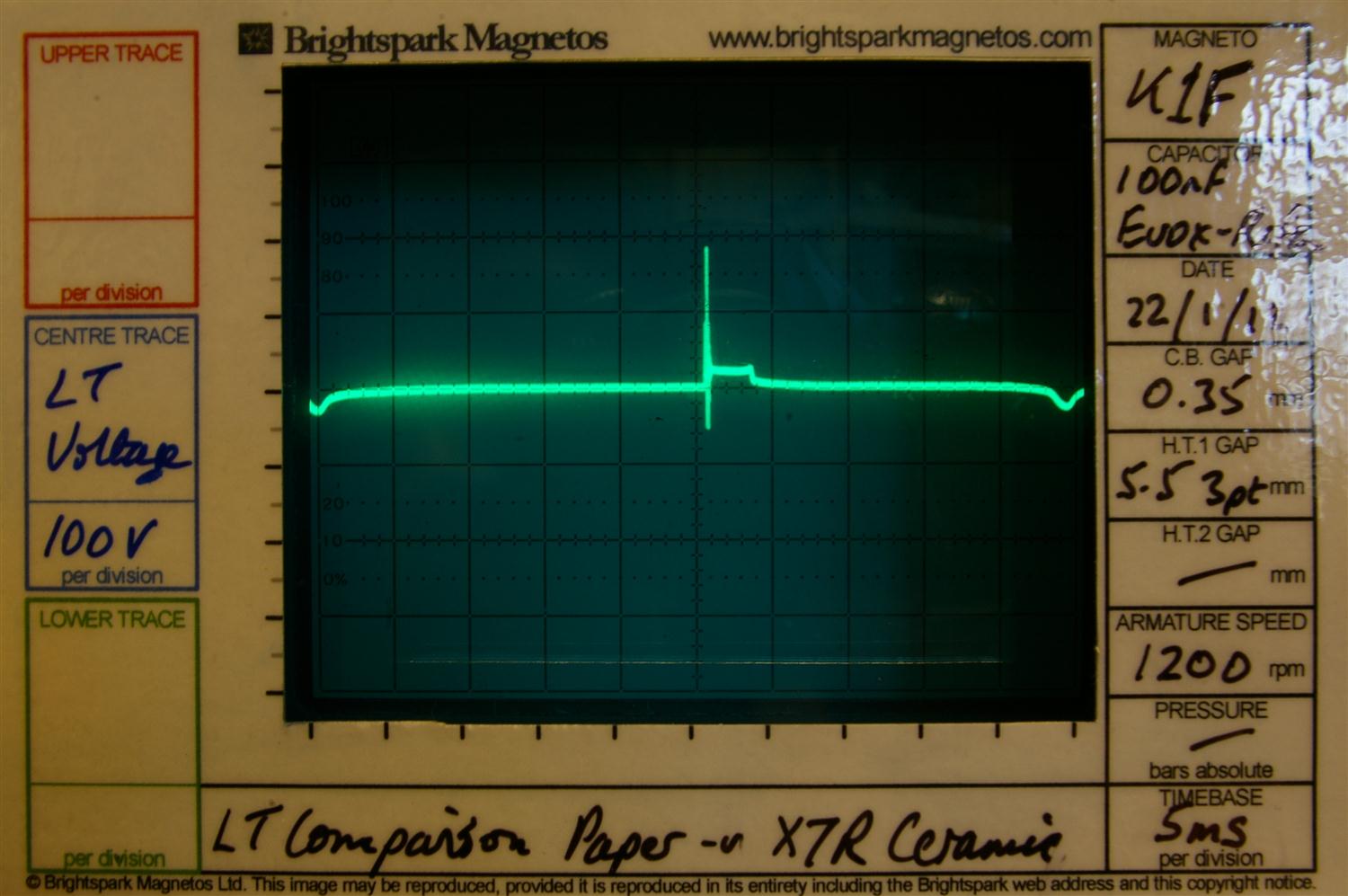
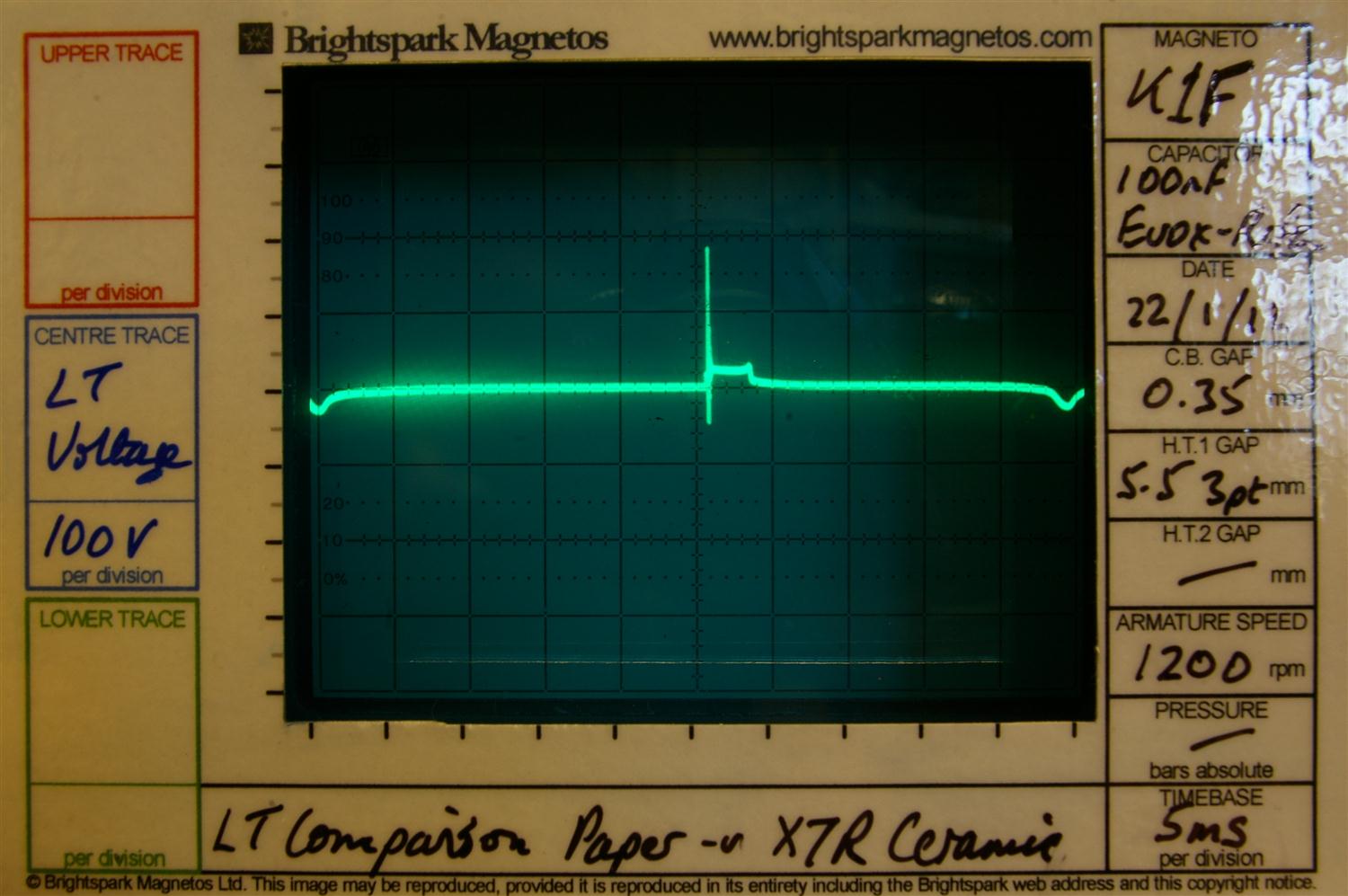
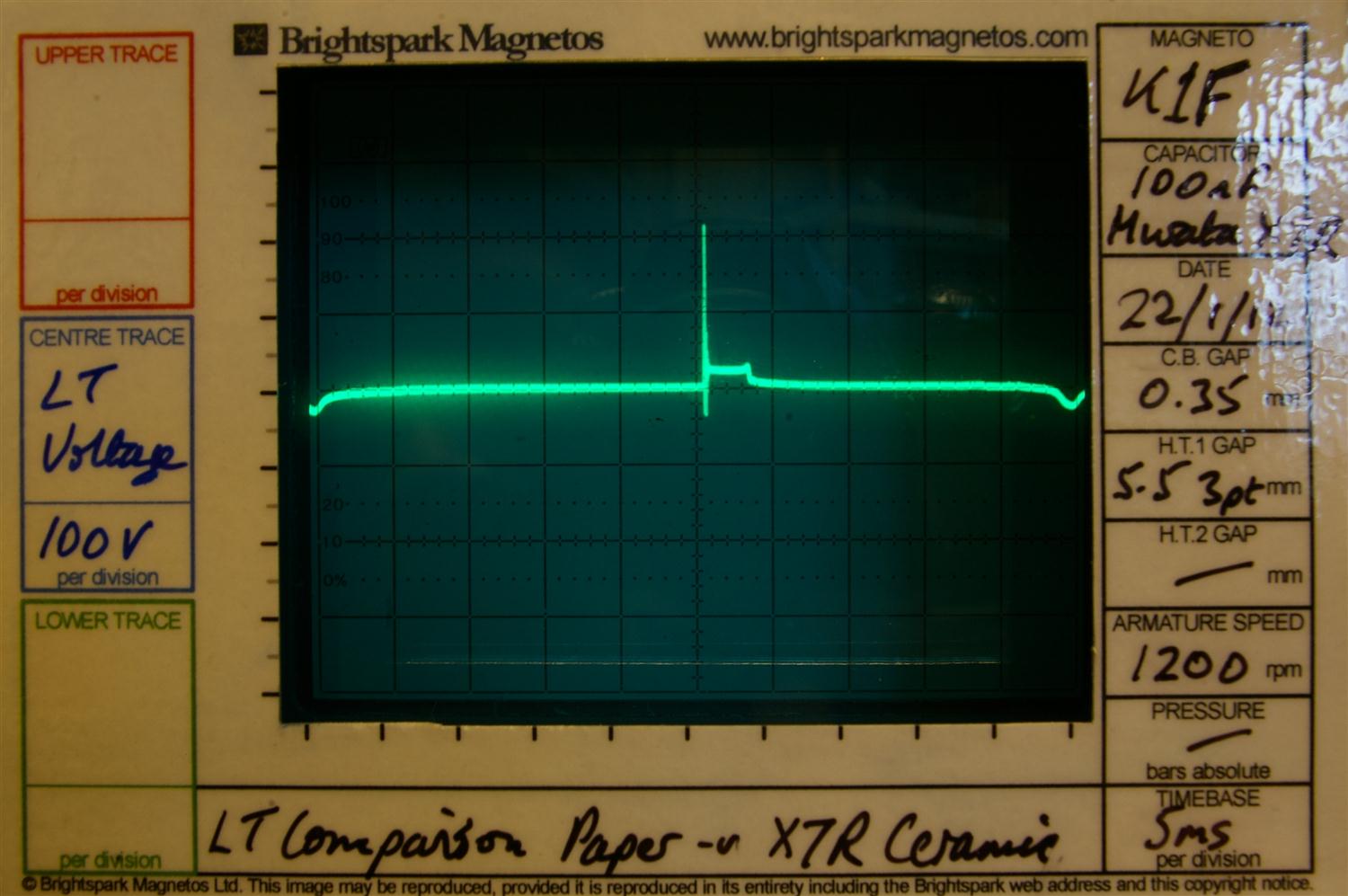
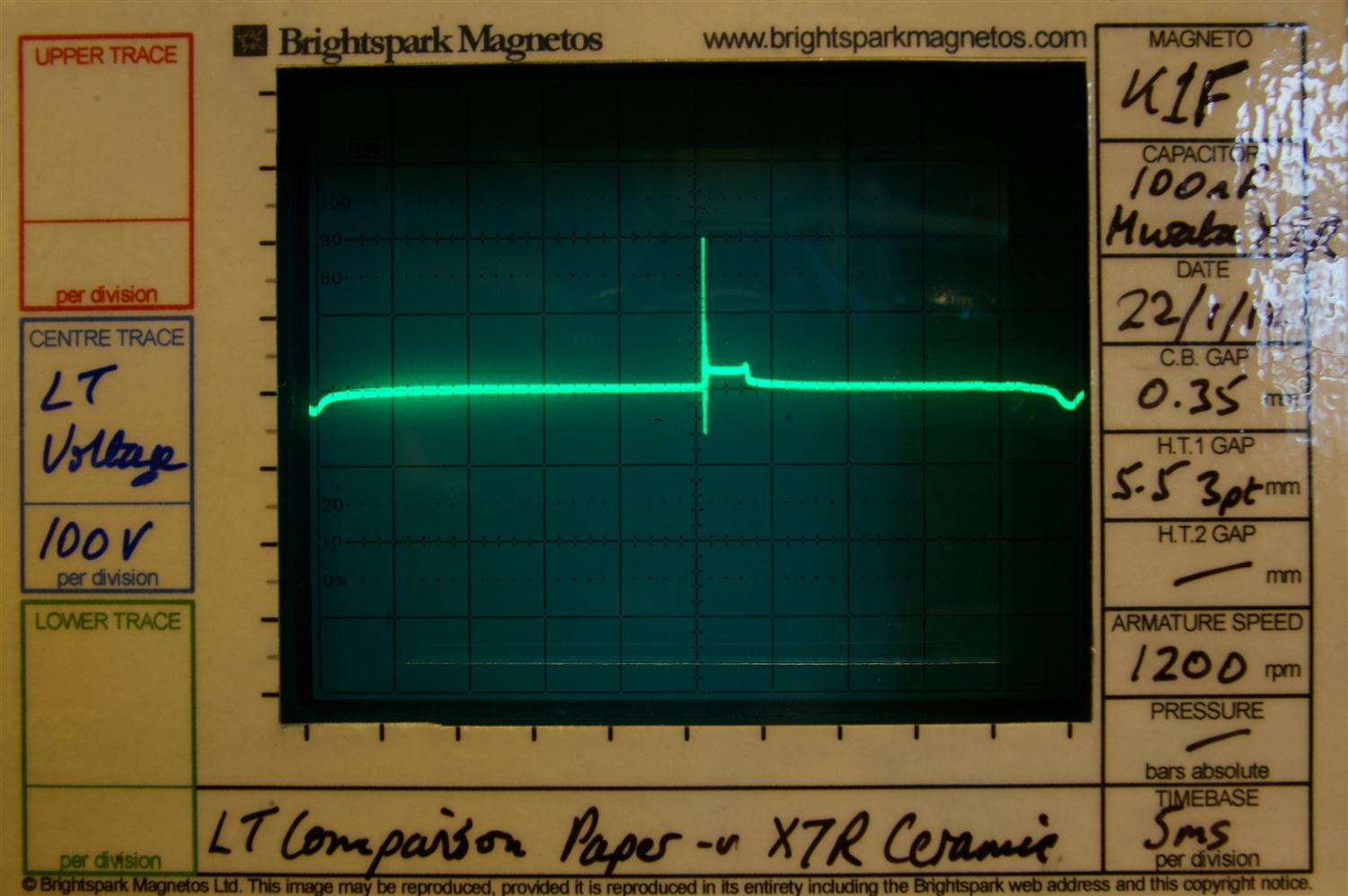
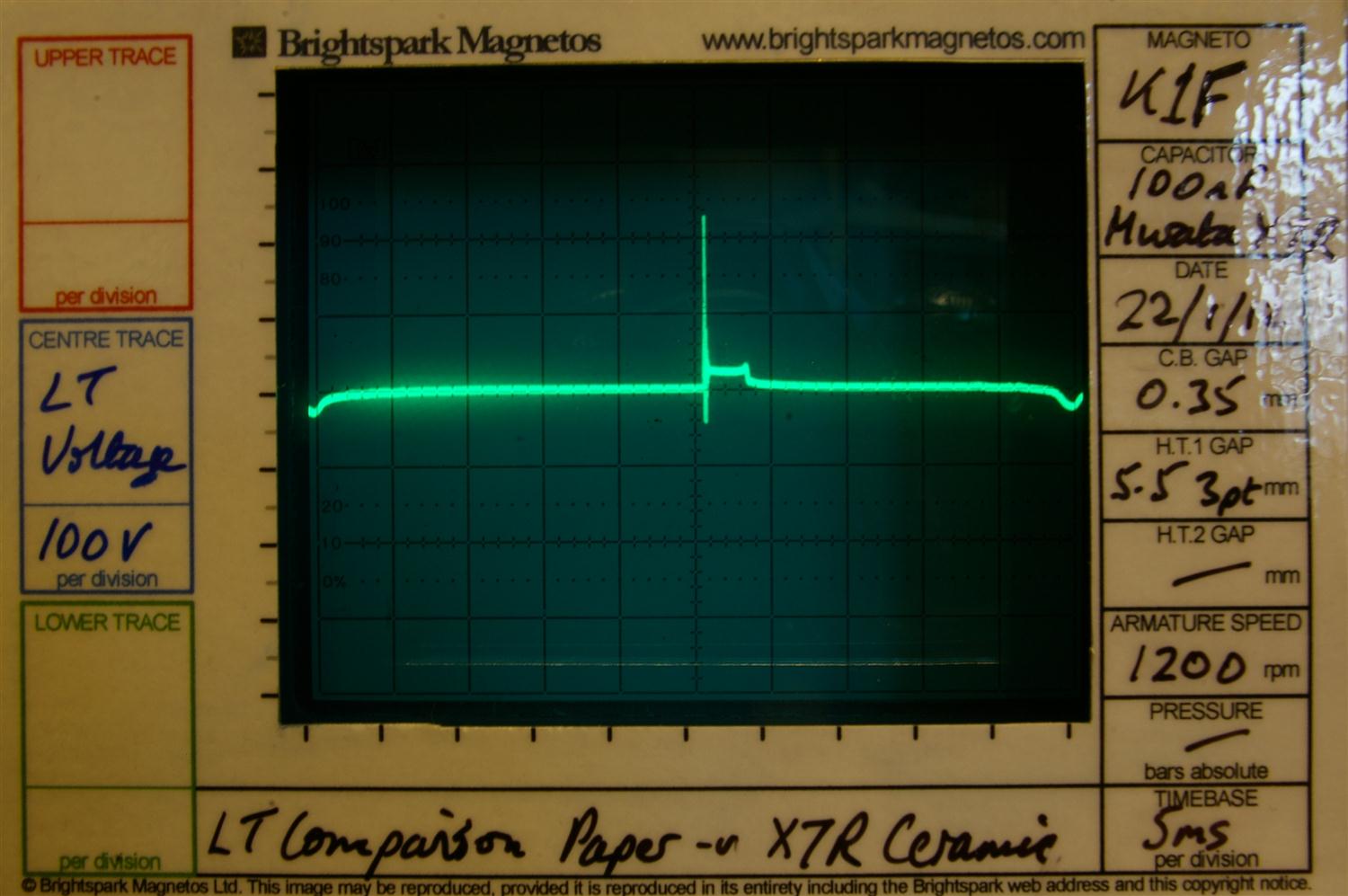
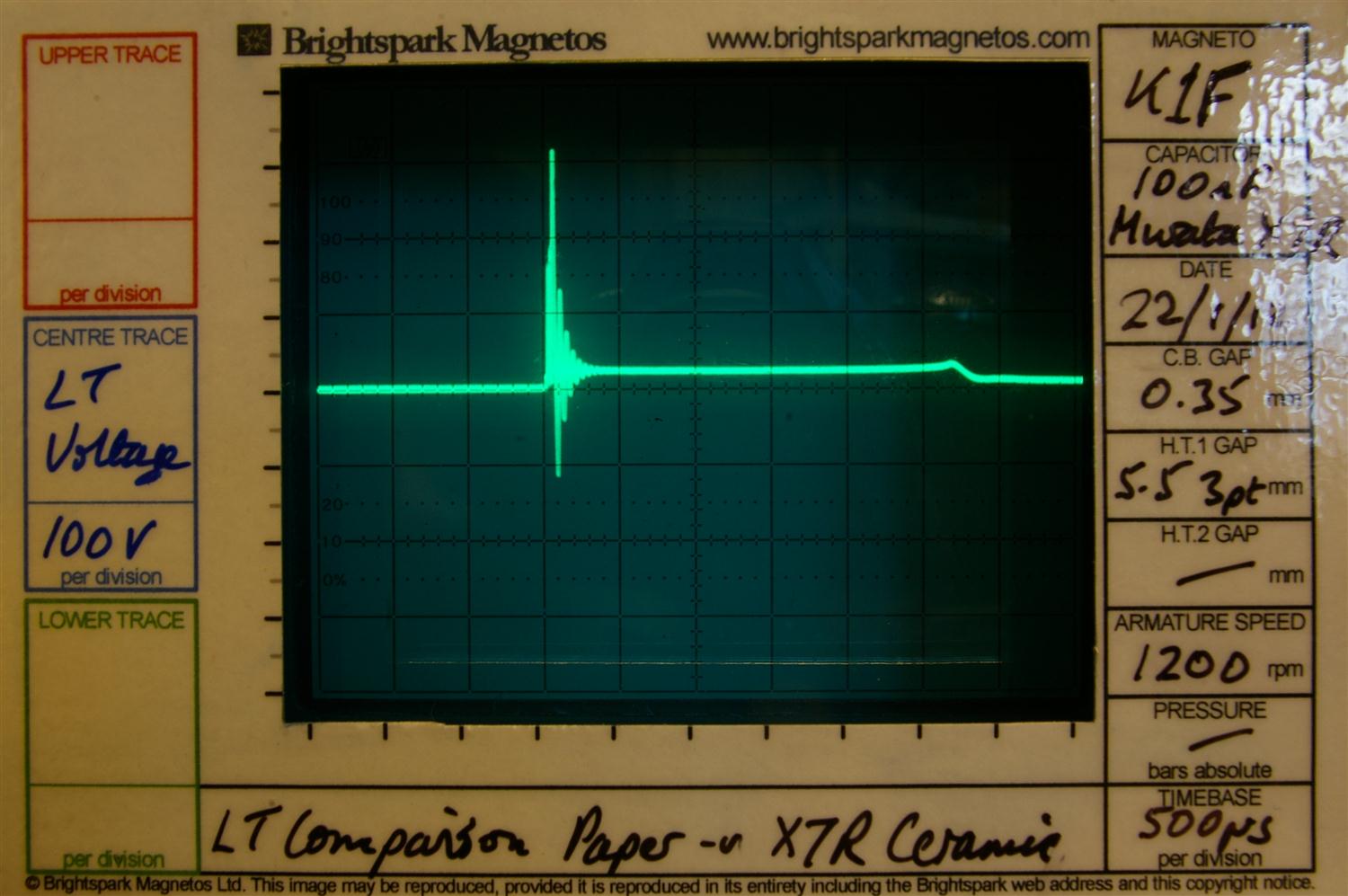
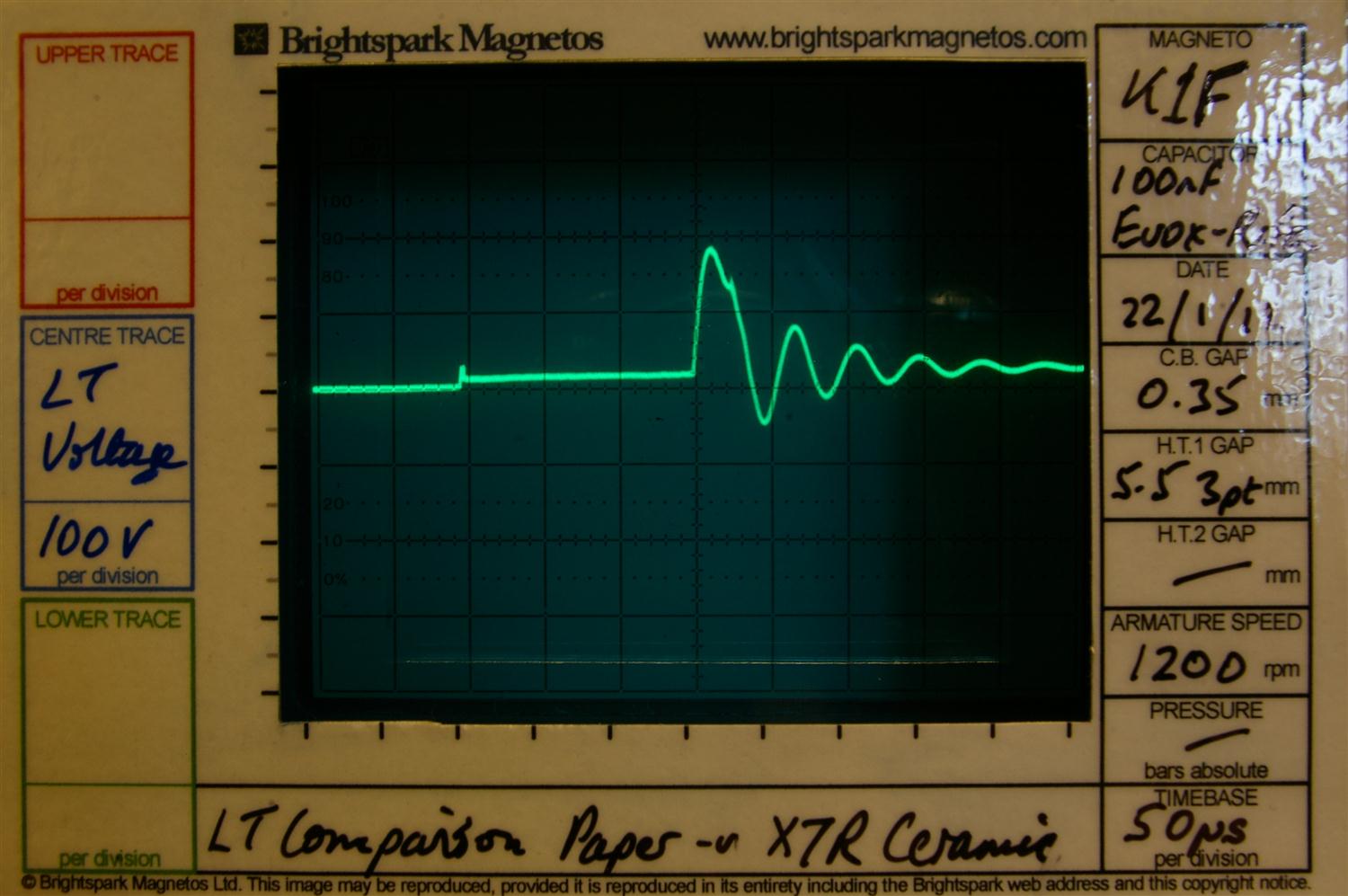
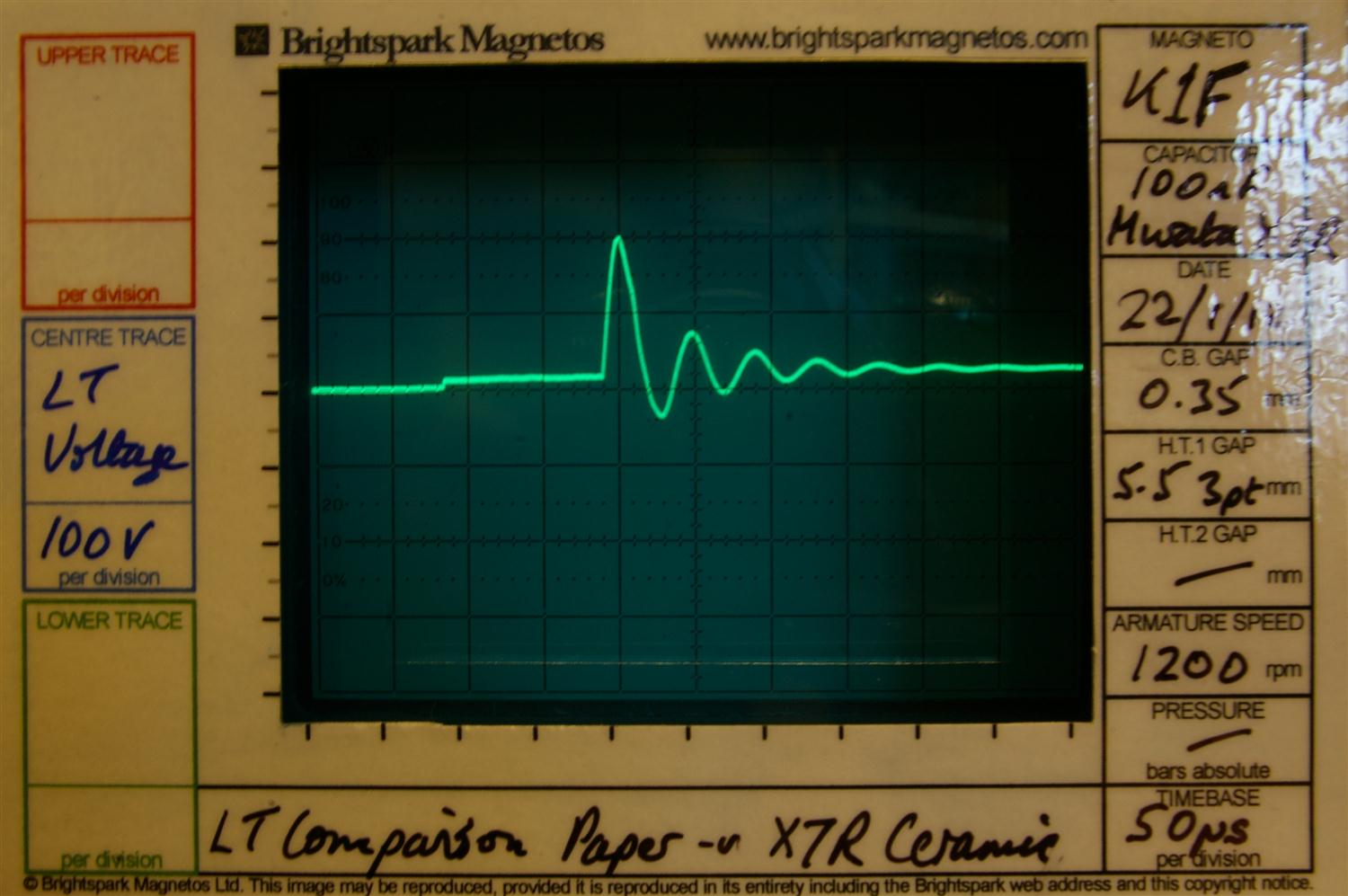
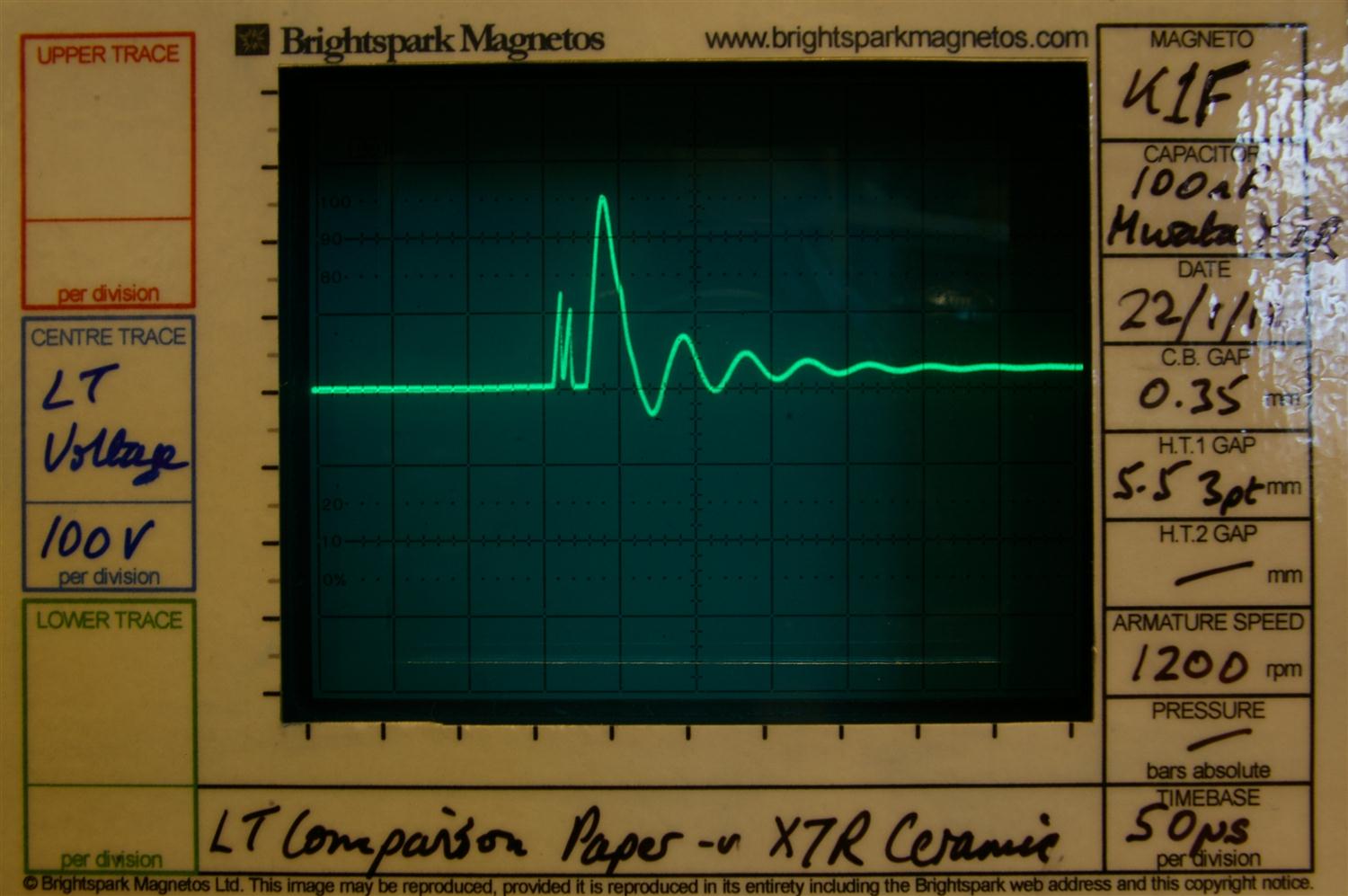
however, that if one compares the LT voltage waveforms on the oscilloscope using
capacitors with a paper dielectric and with an X7R dielectric, there is nothing
to choose between them. The following 'scope traces were obtained using a Lucas
K1F magneto running at 1200 rpm. Capacitances of 100 nF were used, rather than
our preferred 150 nF, because we did not have a 150 nF paper capacitor available
at the time. (You can click on each picture to fill the screen and then click
the back button in your browser to return.)
|
 Brightspark Magnetos
 An
An