|
|
Removing the magneto armature
|
|
|
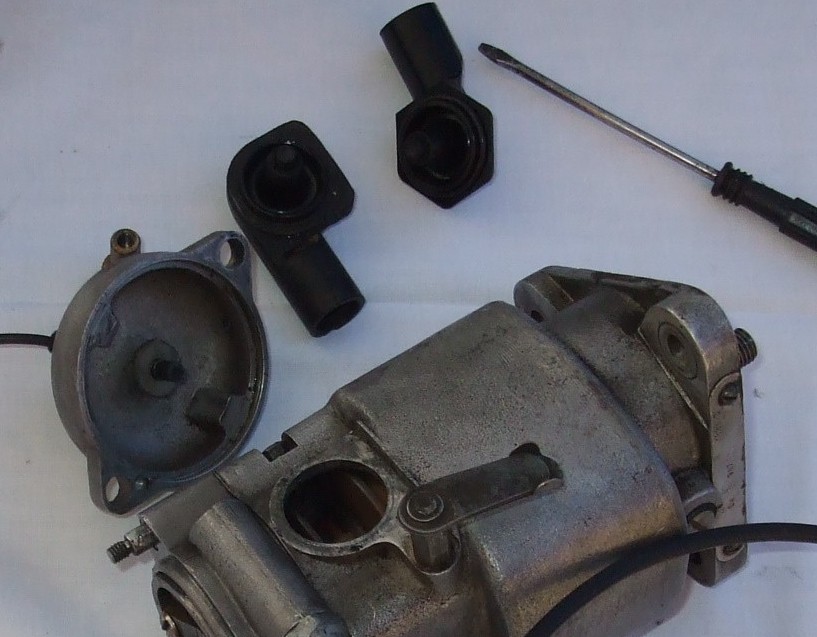
Remove the HT pickup(s) and
contact breaker end cover.
Be careful not to lose the pick-up brush(es). With the K2F magneto in the picture, the pick-ups are
retained by pivoting spring blades. Other types of pick-up may be
held by a pair of screws. The end cover may be retained by a pair of nuts (as
in the example), a pivoting spring blade, or by a large ring screw-threaded
onto the magneto body. |
 |
|
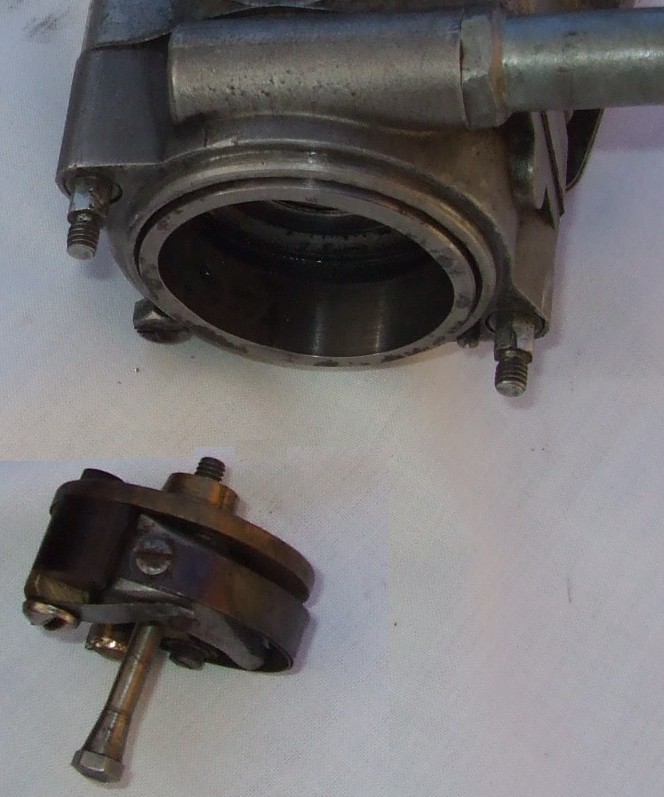
Remove the CB assembly.
For ring-cam instruments:
Release the contact breaker centre screw using a 4BA or 1/4"AF nut
driver or socket. This will allow removal of the contact breaker assembly as
a unit. With screw undone, wiggling it will always free the taper with its
integral key. The assembly in the picture is an original Lucas brass one (to
be contrasted with later Lucas steel ones and more recent steel pattern
ones). Some brass backplates have an auxiliary earth brush on their
rear face.
For face-cam instruments:
Undo the screw holding the moving point and remove the point. This
gives access to the centre screw, which needs to be removed after
straightening the locking tab washer. The CB assembly can then be
withdrawn. Be careful that the points tappet does not fall out.
|
 |
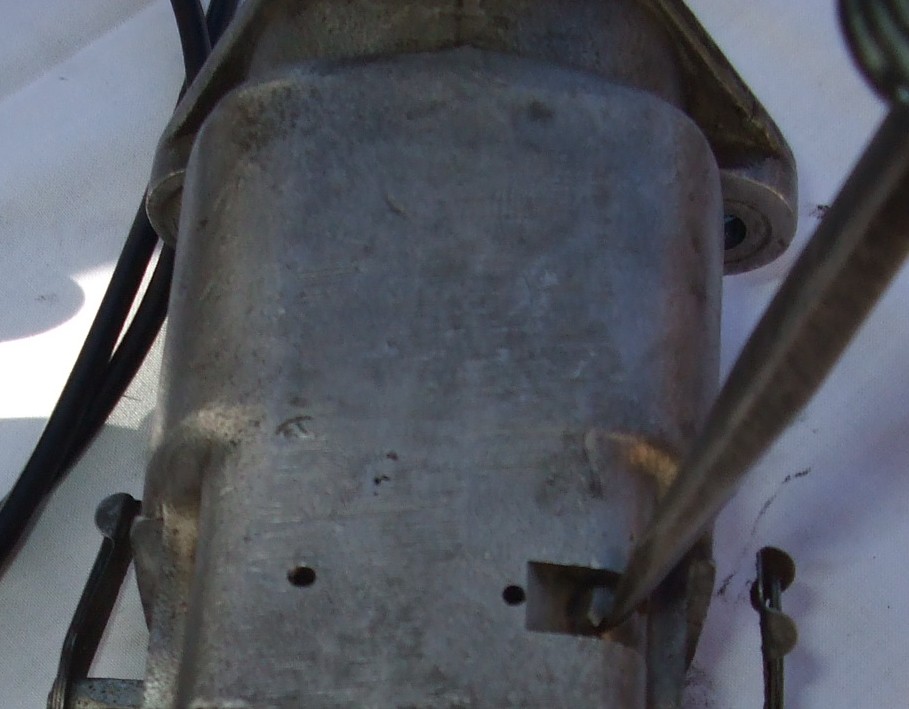 |
Remove the safety screws.
The safety screw(s), if fitted, lie in the same transverse plane as the pick-ups.
Many twin magnetos have two safety screws opposite each
other. Many single magnetos have a single safety screw. Some don't
have any safety screws.
The safety screws are there to provide a safe route to earth for the
magneto's spark energy in the event that the normal path (via the pick-up,
HT cable and sparking plug) is interrupted.
ANY SAFETY SCREWS MUST BE REMOVED BEFORE PROCEEDING FURTHER, otherwise
they will interfere with, and probably break, the slip ring when withdrawing
the armature from the magneto's body. |
|
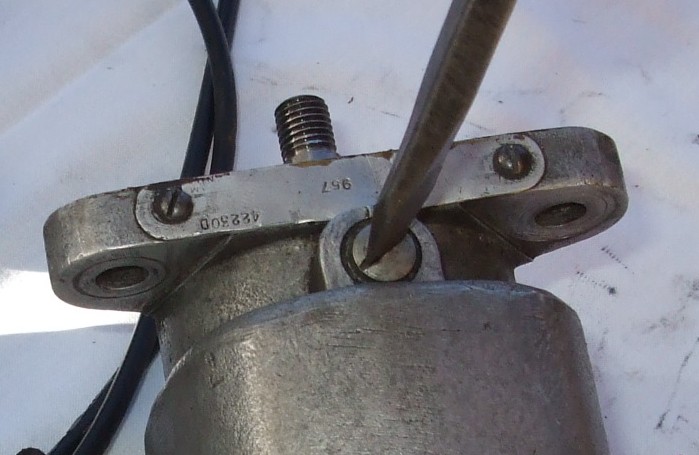 |
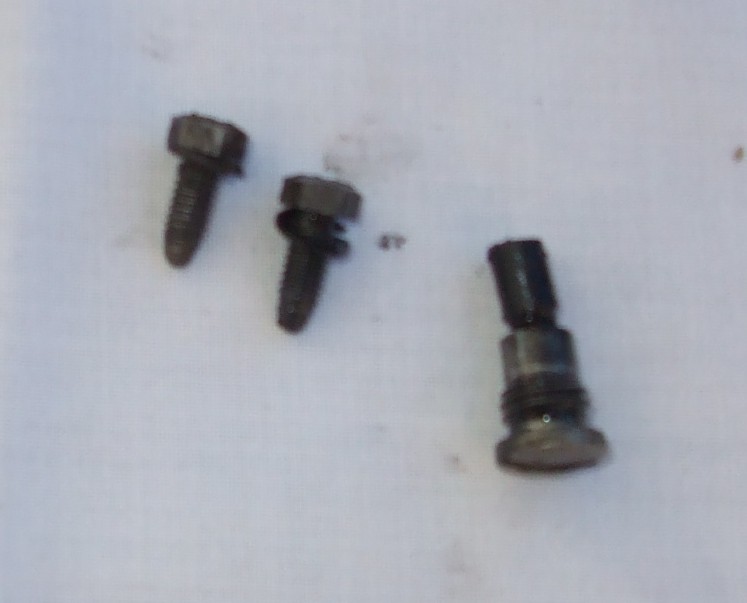
Remove the earth brush.
The earth brush connects the armature body (and thus the earth end of
the HT coil) to the magneto housing (and thus the engine) to
provide a return path for the sparking plug current. The earth brush
assembly
comprises a carbon brush, spring, special hollow screw and usually a fibre
washer. Simply unscrew it.
On some magnetos, the earth brush is sometimes hidden beneath the name
plate. |
 |
 |
Remove the end housing.
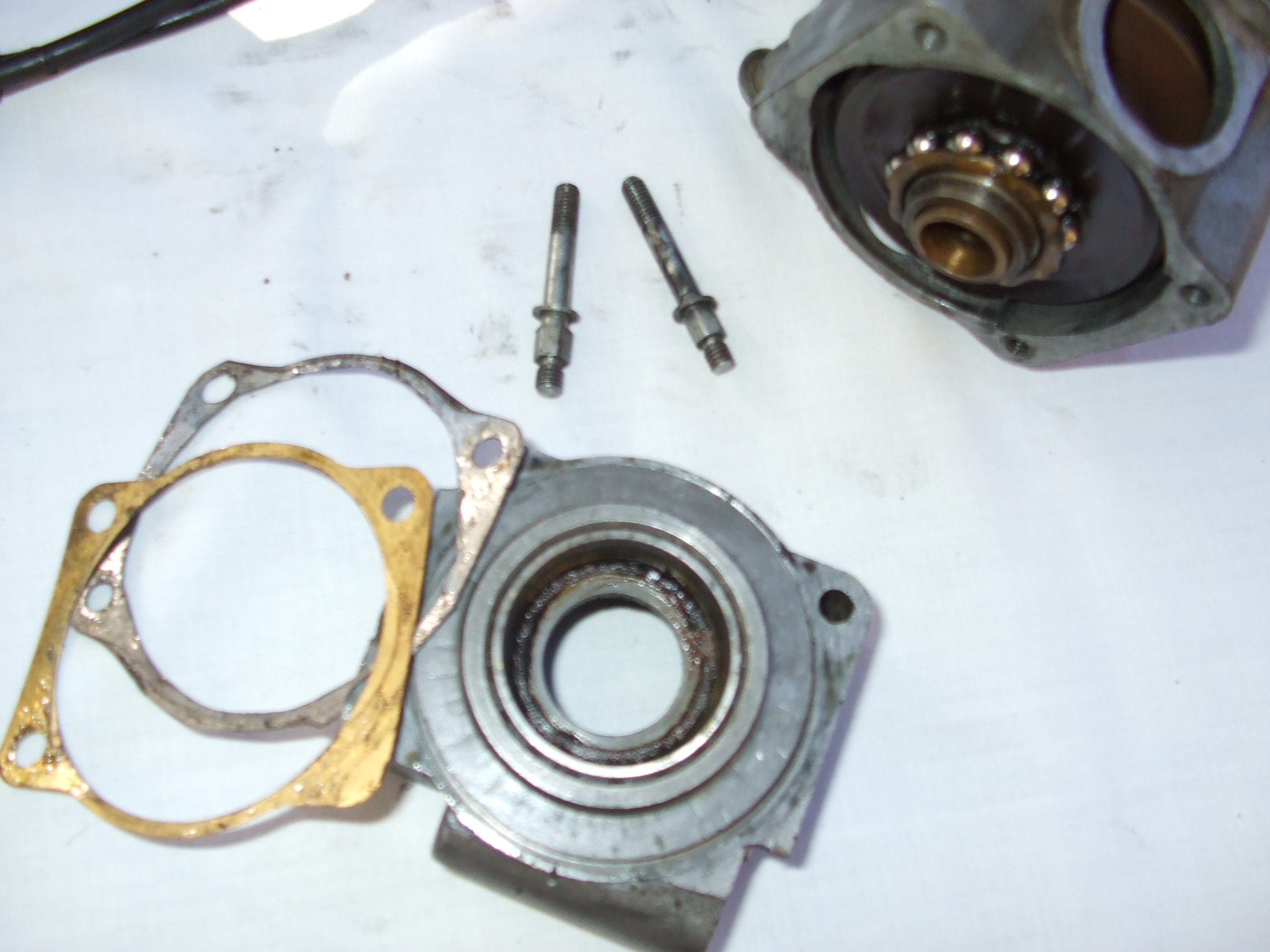
The housing for the cam and CB-end bearing is removed by undoing
the two, three or four screws holding it in place. One of the screws may also
double-up as the mounting post for the spring blade that held the CB end cover
in place.
Note, and retain, any large brass shims (two of which are shown in the
picture).
The outer race of the CB-end bearing should be firmly fixed in the end
housing. However, the insulator between the outer race and the housing may
have disintegrated, leaving the race loose. In that case, the insulator will
need replacing. |
 |
|
Apply a keeper
The magnet strength of
Lucas magnetos (other than early versions with a horseshoe magnet) isn't
significantly affected by removal of the armature, so you can ignore the
rest of this section.
However, with most
other magnetos including BTH, if the magnet is fully magnetised, then it
will lose some of its strength the first time that the armature is removed
(even for a split second) unless some form of keeper is applied before the
armature is removed, and stays in place until after the armature has been
replaced.
A large steel or
cast-iron vice makes a good keeper. If the magneto has an alloy cover over
the magnet and pole pieces, remove it first. Place the magnet pole-pieces
between the jaws of the vice and close the vice just enough to hold the
magneto. Don't squeeze it hard. As an alternative, you can use one of more
steel or cast-iron G-cramps. Again, don't do them up too tightly; with some
magnetos you might loosen the pole-pieces in the casting of the magneto
body.
|
|
|
Remove the armature from the main housing.
The armature can now simply be
pulled out of the housing. The inner
race, cage and balls of the drive-end bearing should come with it, but the
outer race of the drive-end bearing should remain in the housing.
Again, the insulator between the outer race and the housing may have
disintegrated, leaving the race loose, so that it, and the oil seal, may
fall out. In that case, the insulator will need replacing. In any case,
having stripped the magneto this far, it is prudent to replace the insulator
for the drive-end bearing and the oil seal (if provided).
|
| |
Next: Choice of condensectomy |
|
|
 Brightspark Magnetos